



You know what’s interesting? Sometimes, after an NFL game, you glance at the scoreboard and think you understand everything, but the numbers actually tell a story that’s far richer than the final result. We’ve all been there — you watch a game where the Carolina Panthers fight tooth and nail against the Philadelphia Eagles, and while the scoreboard might show one team ahead, the real drama is hidden in the stats. Player stats are like a secret narrative; they reveal effort, strategy, momentum swings, and individual brilliance in ways that raw points never could. And honestly, when you dive into Carolina Panthers vs Philadelphia Eagles match player stats, you start to see patterns — who carried the team under pressure, which defensive strategies disrupted the flow, and how certain moments, often invisible to casual fans, shaped the entire game. It’s not just about touchdowns and interceptions; it’s about tackles made after a gain, pressures that forced hurried throws, and catches that didn’t make the highlight reel but extended critical drives. Once you understand these subtleties, the match transforms from a simple win-loss story into a layered narrative of human effort, strategy, and resilience.
Game Flow Overview: How the Match Unfolded
Before dissecting individual player stats, it’s crucial to Carolina Panthers vs Philadelphia Eagles Match Player Stats look at how the game flowed. The Eagles and Panthers have contrasting styles that are reflected in their stats. Philadelphia tends to control possession, move the chains, and use a measured approach to manage both time and field position. Their offensive line often provides a cushion that allows the quarterback to scan the field and make calculated decisions. In contrast, Carolina’s style is more reactive. The Panthers often rely on in-game adjustments, flexibility, and sudden bursts of speed or creative play-calling to try and offset mismatches. And honestly, that dynamic is visible in every stat sheet. Completion percentages, rushing attempts, and defensive pressures all tell a story of control versus adaptation. The first quarter often sets the tone, with the Eagles trying to establish tempo, while the Panthers respond with high-effort plays designed to stay competitive. Over the course of the game, you can see how momentum swings, how small errors compound, and how individual player performance can alter the narrative entirely. When we look at the stats closely, it’s less about raw numbers and more about understanding which team controlled the narrative and which team had to fight to keep up.
Quarterback Performance: Decision-Making Under Pressure
Carolina Panthers Quarterback Stats
The quarterback is always under scrutiny, and for the Panthers, the numbers usually show a story of perseverance. Passing yards and completion percentages often reflect resilience under pressure. You might see respectable numbers, but they often come with high sack counts or hurried throws, showing the offensive line’s struggles against a strong defensive front. And honestly, that’s where context matters. Stats like pass attempts, completions, and yards can mask the sheer difficulty of the situations the quarterback faced. For example, a short-yardage completion under heavy pressure might not look flashy on the stat sheet, but in the moment, it was critical in sustaining a drive. Panthers QBs also show variability in red-zone efficiency, sometimes forced to improvise due to defensive disruption. These subtleties make their numbers more meaningful than they appear at first glance.
Philadelphia Eagles Quarterback Stats
On the flip side, the Eagles quarterback often benefits from a combination of strategic offensive planning and solid protection. Completion rates are higher, sack numbers lower, and decision-making tends to look clean. And here’s the interesting part — sometimes fewer passing yards actually indicate efficiency. The Eagles don’t need to force throws when the offense is balanced; the game plan allows them to pick optimal opportunities. When examining Philadelphia Eagles match player stats, you can see how calm, calculated execution contributes to sustained drives and reduced risk, creating a contrast with the Panthers, who are frequently adjusting under duress.
Rushing Attack: Who Dominated the Ground Game?
Carolina Panthers Rushing Stats
The Panthers’ rushing stats tell a story of grit and determination. Rushing yards per attempt might fluctuate due to defensive pressure, but the sheer number of carries shows effort and willingness to control parts of the game through sheer physicality. Panthers running backs often excel in short-yardage situations, third downs, and running against stacked boxes, even if it doesn’t translate into explosive numbers. And trust me, those efforts are crucial; they keep drives alive and sometimes shift the psychological momentum, even if it isn’t immediately visible on TV. Rushing efficiency, yards after contact, and long runs are all stats that highlight perseverance and the team’s adaptability against a superior pass rush.
Philadelphia Eagles Rushing Stats
The Eagles, meanwhile, often display efficiency and explosive runs. Their running backs benefit from strong blocking schemes and clearly defined lanes, resulting in higher yards per attempt and significant gains in open-field situations. These stats reveal how their offensive line and running schemes dominate early in drives, setting up opportunities for play-action passes and clock control. And what’s interesting? Comparing these rushing stats side by side shows the difference between reactive versus controlled game strategies — the Panthers fight for every yard, while the Eagles execute almost surgically.
Wide Receivers and Tight Ends: Who Stepped Up?
Carolina Panthers Receiving Corps
Carolina’s receivers often have stats that reflect effort under challenging circumstances. Target numbers can be high, but completion rates may dip due to defensive pressure or tight coverage. Yet, many catches are made under duress, showcasing reliable hands and yards after contact. Long completions might be fewer, but short-to-intermediate gains often sustain drives. And honestly, those numbers highlight resilience — a receiver catching a ball while surrounded by defenders shows skill that raw stats don’t fully capture.
Philadelphia Eagles Receiving Corps
The Eagles’ receivers often have more explosive stats: longer receptions, higher average yards per catch, and significant red-zone production. Target distribution tends to be balanced across multiple players, which helps prevent defensive predictability. And when you examine Philadelphia Eagles match player stats, it’s clear that their receiving corps contributes not just in volume but in efficiency, consistently converting opportunities into points.
Defensive Stats: Tackles, Pressures, and Turnover Creation
Carolina Panthers Defensive Stats
Defense is where Panthers stats often reveal high effort and volume. Total tackles, assisted tackles, pressures, and pass breakups show a unit constantly engaged. Panthers defenders might not create as many splash plays as their counterparts, but their consistency matters. Linebackers clean up broken plays, safeties prevent big gains, and the defensive front absorbs pressure to buy time for coverage. And yes, while some stats like sacks or interceptions might be lower, the overall contribution to game momentum is significant.
Philadelphia Eagles Defensive Stats
Eagles defenders often dominate disruption stats. Sack totals, QB hits, and forced turnovers usually highlight aggressive play. Their defensive line and linebackers consistently pressure quarterbacks, alter offensive rhythm, and create opportunities for turnovers. When reviewing Philadelphia Eagles match player stats, these numbers often explain why opposing quarterbacks are hurried or mistakes occur. It’s a testament to planning, discipline, and execution.
Special Teams Performance: Small Details, Big Impacts
Special teams often fly under the radar, but stats here are crucial. Field position, return yards, punt and kick coverage, and kicking accuracy all shape game flow. Eagles special teams tend to outperform in efficiency metrics — longer returns, fewer mistakes, and consistent scoring opportunities from field goals. Panthers stats often reflect stability but fewer momentum-shifting plays. Over four quarters, these small differences compound, subtly affecting overall team performance and player stats.
Turnovers and Game-Changing Plays
Interceptions, fumbles, and forced errors are critical in NFL matchups. Eagles capitalize efficiently on turnovers, translating short fields into points, and often shifting momentum decisively. Panthers turnovers force reactive plays, more passing attempts, and increased pressure. When you look at Carolina Panthers vs Philadelphia Eagles match player stats, turnovers frequently correlate with both scoring swings and psychological momentum.
Analyzing Momentum Through Stats
Momentum isn’t just hype; it’s quantifiable. Third-down conversions, yards gained under pressure, and completion percentages at key intervals show when a team controlled the game. Eagles’ stats often indicate periods of calm, controlled execution, while Panthers’ stats reflect effort, adaptation, and sporadic bursts of success. Understanding these nuances helps fans interpret the stats beyond raw numbers.
Key Takeaways from Player Stats
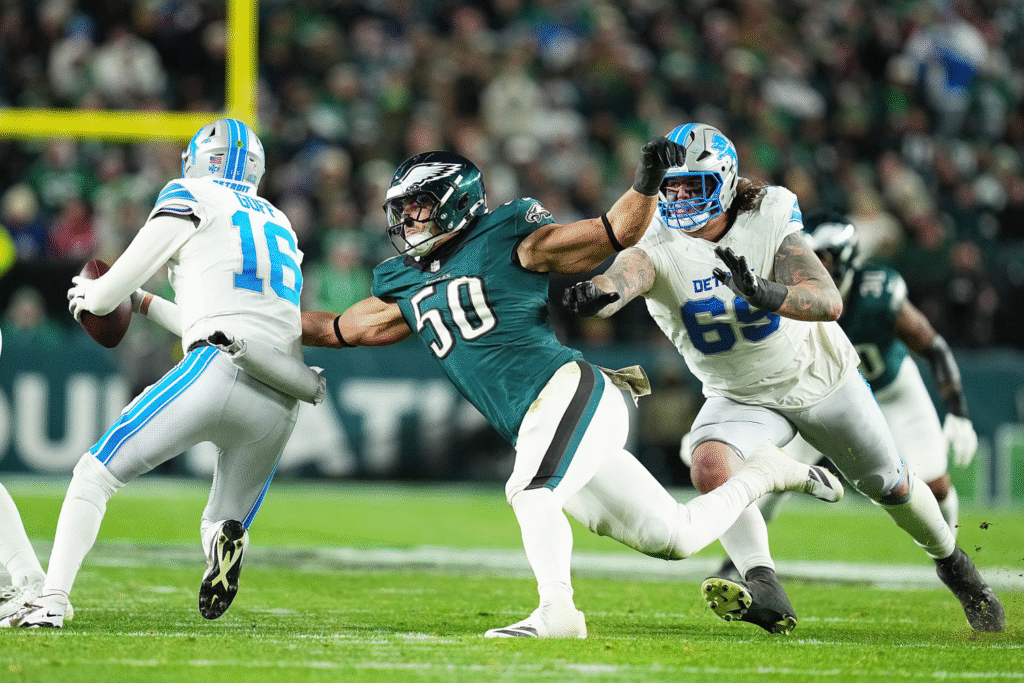
- Eagles: Efficiency, balance, and explosive plays
- Panthers: Effort, adaptability, and defensive resilience
- Turnovers, sacks, and third-down conversions shape overall results
- Player stats reflect narrative: who dominated momentum, who compensated under pressure, and who created opportunities
These insights are invaluable for fans, analysts, and fantasy football enthusiasts alike.
Conclusion: Why Player Stats Matter More Than You Think
At the end of the day, Carolina Panthers vs Philadelphia Eagles match player stats aren’t just numbers. They tell a story of preparation, pressure, perseverance, and performance. They explain why certain drives succeeded or failed, why one quarterback looked calm while the other struggled, and which players quietly influenced the game’s narrative. Next time you watch an NFL matchup, don’t just look at the score — look at the stats. They’re telling the story you didn’t see on TV, and understanding them brings the game alive in ways raw points never could.
FAQs
Why are player stats important in Panthers vs Eagles games?
They reveal momentum, individual effort, and strategies beyond the scoreboard.
Who usually dominates these stats?
Eagles often dominate in efficiency metrics, while Panthers show high defensive effort.
Do turnovers heavily impact player stats?
Yes. Turnovers change field position, scoring chances, and defensive pressure.
Which units most influence these stats?
Quarterbacks, offensive lines, and defensive fronts play the biggest role in shaping overall stats.
