


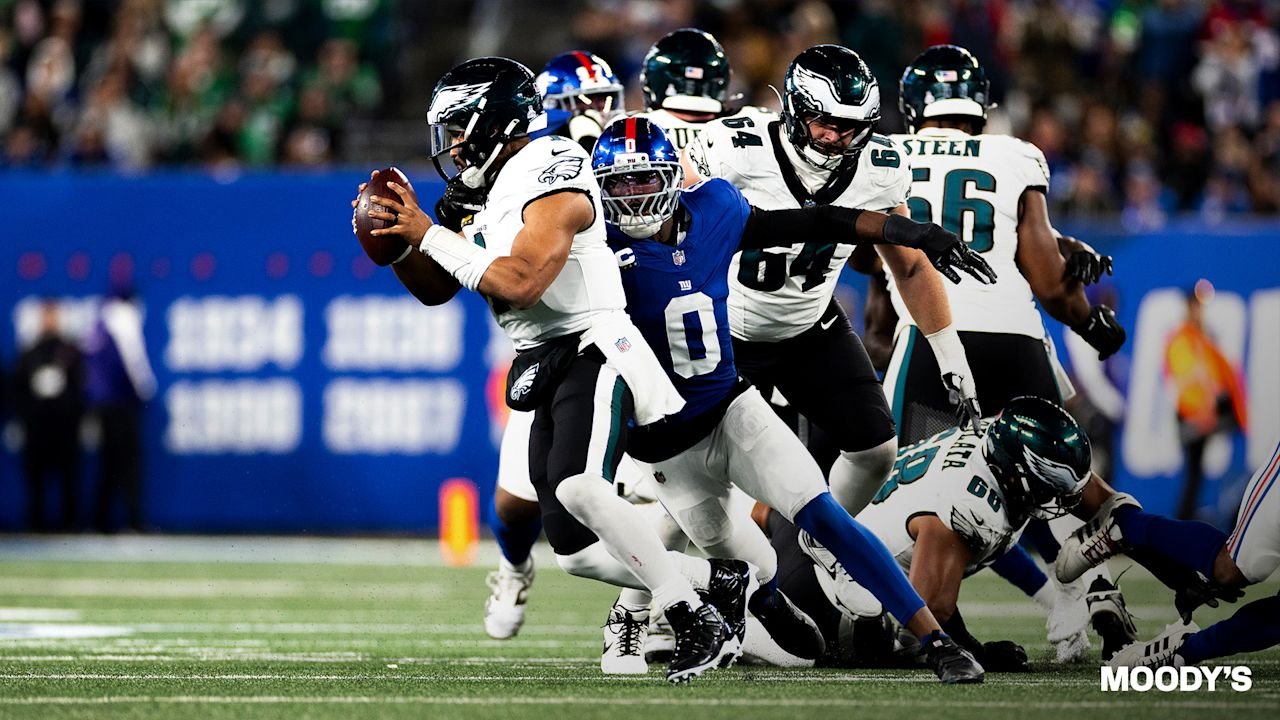
You know what’s interesting? Some NFL matchups don’t need hype. They don’t need dramatic trailers or viral tweets to feel important. The moment you hear the names, your mind already knows — this is serious. Philadelphia Eagles vs New York Giants is exactly that kind of matchup. It’s not just football. It’s history, pride, frustration, redemption, and sometimes straight-up chaos packed into four quarters.
We’ve all been there, right? Sitting with friends or scrolling through live updates, constantly refreshing stat pages, arguing about quarterbacks, rushing yards, sacks, and turnovers. And to be honest, when Eagles and Giants face each other, player stats suddenly feel heavier. A normal 250-yard passing game feels bigger. A single sack feels louder. Even a missed tackle stays in your head longer.
That’s why Philadelphia Eagles vs New York Giants match player stats are searched so obsessively. Fans don’t just want to know what happened. They want to know why it happened, who stepped up, and who disappeared when it mattered most. This article goes deep — not just into numbers, but into the meaning behind them, using storytelling, analysis, and real football logic that any fan can understand.
So relax, take your time, and let’s break this rivalry down the right way.
Why Eagles vs Giants Player Stats Matter More Than Most Rivalries
There are many rivalries in the NFL, but not all of them carry the same emotional and competitive weight. Eagles vs Giants is different because these teams see each other regularly, often with division standings and playoff positioning on the line. That changes how players perform, how coaches plan, and how stats are produced.
When players know the opponent this well, stats become more intentional. Quarterbacks don’t just throw passes — they attack known weaknesses. Defensive coordinators don’t guess — they scheme aggressively. And that’s why Philadelphia Eagles vs New York Giants match player stats often show patterns that don’t appear in other games.
You’ll notice trends like quarterbacks taking fewer risks, running backs getting heavier workloads, and defenses focusing on pressure rather than coverage. These aren’t coincidences. They’re responses to rivalry pressure.
Quarterback Stats: The Mental Battle Behind the Numbers
Eagles Quarterback Performance Trends
Eagles quarterbacks, historically and in recent seasons, tend to approach Giants games with a balance-first mindset. Instead of forcing deep throws all game, they usually prioritize efficiency, ball control, and situational awareness. This is why Eagles quarterback stat lines often look clean rather than explosive.
Completion percentages tend to be strong, interceptions are usually limited, and rushing stats quietly add value. And honestly, that’s not accidental. Giants defenses often try to keep everything in front of them, forcing quarterbacks to stay patient. The Eagles QB who succeeds here is the one who doesn’t panic.
When you look at Philadelphia Eagles vs New York Giants match player stats, you’ll often see Eagles quarterbacks contributing with their legs at critical moments — third downs, red-zone plays, or late-game clock control. Those rushing yards don’t always stand out, but they win games.
Giants Quarterback Performance Trends
Giants quarterbacks face a very different challenge. The Eagles’ defensive front is usually aggressive, physical, and relentless. That pressure shows up in the stats. Giants quarterbacks often post lower yards per attempt, faster release times, and conservative decision-making.
But here’s the thing — a “quiet” stat line doesn’t mean a bad performance. In this rivalry, Giants quarterbacks are often tasked with survival football. Avoid turnovers, extend drives, and keep the game close. When they succeed, the stats may not look flashy, but efficiency metrics tell a deeper story.
That’s why you can’t judge Giants quarterback performance by yardage alone in Eagles matchups.
Running Back Stats: Where Toughness Shows Up Clearly
If you really want to understand Eagles vs Giants football, stop staring at passing yards for a moment and look at rushing attempts, yards after contact, and fourth-quarter carries. That’s where the truth lives.
Eagles Running Game Stats Explained
Eagles running backs usually benefit from strong offensive line play, and that shows up clearly against the Giants. Early in games, rushing stats might look average, but as the game progresses, something changes. Defensive fatigue sets in, gaps widen, and suddenly the Eagles’ yards per carry increase.
In many Philadelphia Eagles vs New York Giants match player stats, you’ll notice Eagles running backs having their best runs late in the game. That’s not luck — it’s physical dominance. Goal-line efficiency is another key area where Eagles backs often shine, turning red-zone opportunities into points.
Giants Running Game Stats Explained
Giants running backs, on the other hand, often carry a heavier burden. Their stats usually show higher volume but mixed efficiency. That’s because the Giants frequently rely on the run game to slow the Eagles’ pass rush and control tempo.
Explosive plays matter more than consistency here. A single long run can completely change momentum, even if overall averages stay modest. When Giants running backs succeed, you’ll often see it reflected in time of possession rather than raw yardage.
Wide Receiver Stats: Moments That Shift the Game
Eagles Receivers and Tight Ends
Eagles receivers tend to be situational killers in this rivalry. Their stat lines may not always explode, but key catches — third downs, red-zone targets, late-game conversions — tell the real story.
Tight ends, in particular, often play a quiet but crucial role against the Giants. Defensive focus on wideouts opens space underneath, and smart quarterbacks take advantage. That’s why tight end reception stats often spike in Eagles vs Giants matchups.
Giants Receivers and Tight Ends
Giants receivers usually reflect a volume-based approach. You’ll often see higher reception totals but fewer explosive plays. That’s by design. Short routes, quick releases, and timing patterns help neutralize pressure.
When Giants receivers do break free deep, those plays tend to be game-changing — and you’ll see them referenced constantly in post-game analysis.
Defensive Player Stats: Where the Rivalry Turns Brutal
This rivalry is physical. There’s no polite way to say it. And defensive stats prove that every time.
Eagles Defensive Stats Breakdown
Eagles defenders often dominate pressure-based metrics. Sacks, quarterback hits, tackles for loss — these numbers matter more than total yards allowed. Even in games where the Giants move the ball decently, pressure stats reveal who controlled the line of scrimmage.
Linebackers and defensive backs also show up in turnover-related stats. Forced fumbles and interceptions often swing momentum dramatically in this matchup.
Giants Defensive Stats Breakdown
Giants defenders usually shine in effort-based stats — tackles, assisted tackles, red-zone stops. When facing a strong Eagles offense, Giants defenses often bend without breaking, and that resilience shows up clearly in situational metrics.
Third-down defense and goal-line stands are areas where Giants defensive stats frequently tell a story of survival and resistance.
Special Teams Stats: The Quiet Game-Changers
Special teams don’t always dominate headlines, but in Eagles vs Giants games, they matter more than people realize. Field position battles, return yardage, and kicking accuracy under pressure often decide close games.
A single long punt return or missed field goal can flip momentum instantly — and when fans rewatch these games, special teams stats suddenly feel huge.
How to Properly Read Philadelphia Eagles vs New York Giants Match Player Stats
Here’s where many fans go wrong: they look at totals instead of context. A quarterback throwing for fewer yards might have played a smarter game. A running back with modest yardage may have controlled the clock perfectly.
When analyzing Philadelphia Eagles vs New York Giants match player stats, always consider:
- Game script
- Field position
- Turnover impact
- Situational performance
Those factors explain results better than box scores alone.
Why These Stats Matter for Fantasy Football and Betting Fans
Let’s be honest — fantasy players and bettors obsess over this matchup for a reason. Trends matter here. Certain positions consistently outperform expectations, while others struggle due to scheme and pressure.
Understanding historical tendencies helps fans make smarter decisions — and that’s why these stats are analyzed so deeply every season.
The Bigger Picture: What These Stats Say About Team Identity
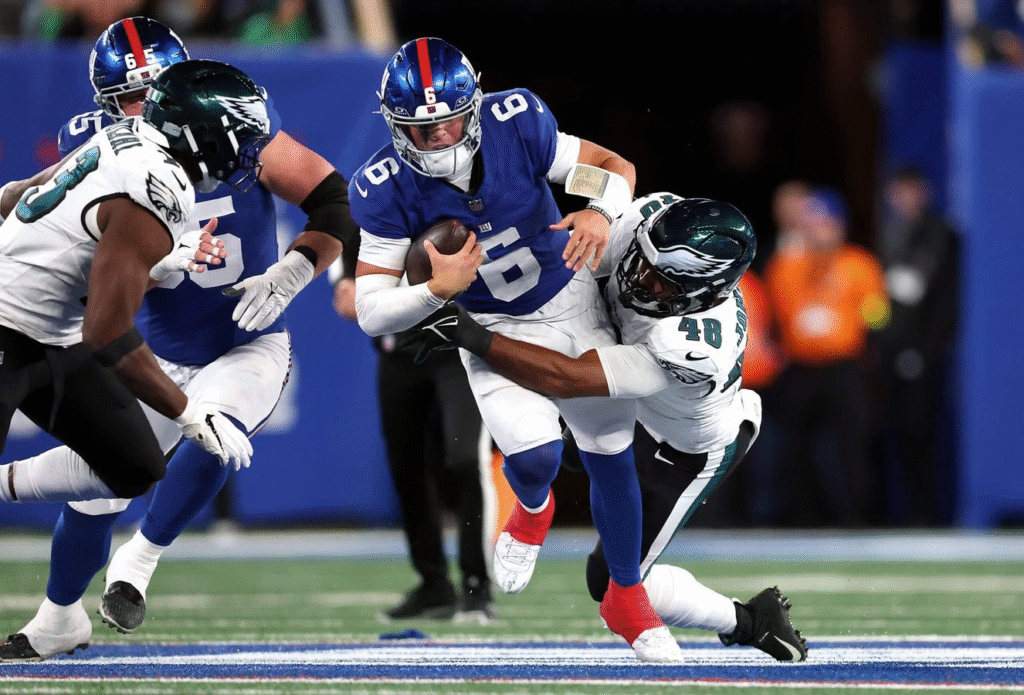
Eagles vs Giants player stats often reveal who these teams really are. Physical or finesse. Aggressive or patient. Explosive or methodical.
That’s why analysts love this rivalry. It strips teams down to their core identity.
Conclusion: Stats Change, Rivalries Don’t
At the end of the day, numbers fade. Seasons end. Players move on. But the intensity behind Philadelphia Eagles vs New York Giants match player stats never disappears.
These stats aren’t just numbers — they’re emotional snapshots of one of the NFL’s most enduring rivalries. So next time you check the box score, slow down and read between the lines. You’ll see a story that goes far deeper than yards and touchdowns.
FAQs
Q1: Why are Eagles vs Giants match player stats so popular?
Because this rivalry has history, emotion, and consistent divisional impact.
Q2: Which stats matter most in this matchup?
Pressure stats, red-zone efficiency, and third-down performance.
Q3: Do home games affect player stats?
Yes, home-field advantage often boosts defensive pressure and efficiency.
Q4: Are these stats useful for fantasy football analysis?
Absolutely, especially when tracking matchup-based performance trends.
