


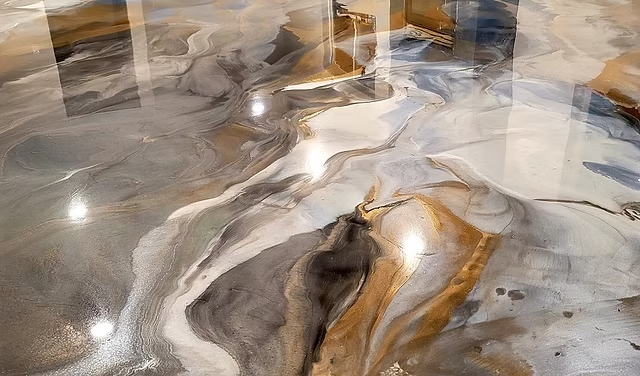
Epoxy colored sand floor coating is a popular flooring solution for spaces that need strength, style, and long-term performance. It combines epoxy resin with specially selected colored sand aggregates. This creates a textured surface that can handle heavy use while offering an attractive decorative finish. It is commonly used in garages, warehouses, workshops, commercial buildings, showrooms, and industrial facilities.
Unlike ordinary painted floors, epoxy colored sand systems create a thicker and more durable surface. The colored sand also adds texture, which can improve traction underfoot. With the right preparation and installation, this type of flooring can provide years of reliable service. It can also be customized with different colors and patterns to match a property’s design.
What Is Epoxy Colored Sand Floor Coating?
Epoxy colored sand floor coating is a flooring system made from epoxy resin, hardener, and decorative colored sand. The epoxy acts as a strong bonding material. The sand provides texture, color, and additional body to the coating.
During installation, the prepared concrete floor receives an epoxy layer. Colored sand is then broadcast across the surface. After curing, excess material may be removed before additional epoxy coats are applied. The final result is a strong, textured, and visually appealing floor.
This system can be adjusted for different environments. Contractors can select aggregate sizes, colors, and coating thicknesses based on the project’s needs.
Key Benefits of Epoxy Colored Sand Floor Coating
One of the biggest advantages of epoxy colored sand floor coating is durability. The finished surface can resist regular foot traffic, vehicle movement, and many common forms of wear.
The coating also offers excellent visual appeal. Colored aggregates create a natural stone-like appearance that can look more attractive than plain concrete.
Other benefits include:
- Strong resistance to abrasion
- Easy cleaning and maintenance
- Good traction
- Customizable colors
- Seamless surface
- Resistance to many chemicals
- Long service life
- Professional appearance
These benefits make epoxy colored sand flooring suitable for both practical and decorative applications.
Why Colored Sand Is Used in Epoxy Flooring
Colored sand does more than improve the appearance of an epoxy floor. It also changes the surface texture and can improve its functional performance.
A textured surface can provide better traction than a smooth coating. This is especially useful in areas where floors may become wet or exposed to spills. The aggregate can also help create a thicker flooring system.
Different colors can be blended to create unique designs. Businesses may choose colors that match their branding, interior design, or safety requirements.
Where Is Epoxy Colored Sand Flooring Used?
Epoxy colored sand floor coating can be used in many residential, commercial, and industrial environments.
Common applications include:
- Garages
- Workshops
- Warehouses
- Manufacturing facilities
- Retail stores
- Showrooms
- Commercial kitchens
- Walkways
- Service areas
- Commercial buildings
It is particularly useful where a floor must combine durability with a professional appearance.
How Is Epoxy Colored Sand Floor Coating Installed?
Proper installation is important for achieving a durable result. The process normally starts with concrete preparation. The floor must be clean, dry, and free from grease, dust, loose material, and other contaminants.
Cracks and damaged areas should be repaired before coating. Mechanical grinding or similar preparation methods may be used to improve adhesion.
The epoxy components are then mixed according to the manufacturer’s instructions. A base coat is applied to the prepared concrete. Colored sand is broadcast over the wet epoxy at the required coverage rate.
After curing, loose aggregate can be removed. Additional epoxy coats may then be applied to lock the sand into place and create the desired finish.
Choosing the Right Colored Sand
The right aggregate can affect both appearance and performance. Colored sand is available in many shades and particle sizes.
For decorative areas, property owners may focus mainly on color combinations. Industrial floors may require aggregate selected for better traction and wear resistance.
It is also important to consider the coating’s intended use. A professional flooring contractor can recommend the appropriate sand size and broadcast rate for the project.
Importance of Concrete Surface Preparation
Surface preparation is one of the most important parts of epoxy flooring installation. Even a high-quality epoxy product can fail if it is applied over a poorly prepared surface.
Concrete should be inspected for cracks, moisture problems, oil contamination, and weak areas. Repairs should be completed before applying the coating.
Grinding or other mechanical preparation can remove contaminants and create a suitable profile. Proper preparation helps the epoxy bond securely to the concrete.
Maintenance of Epoxy Colored Sand Floors
One reason people choose epoxy colored sand flooring is its relatively simple maintenance. Regular sweeping can remove dirt and loose particles from the surface.
The floor can also be cleaned with a suitable mild cleaner and water. Spills should be removed promptly, especially when working with substances that could stain or damage the coating.
Avoid harsh cleaning chemicals unless they are confirmed to be compatible with the flooring system. Heavy equipment should also be used carefully to prevent unnecessary damage.
Factors That Affect the Cost
The cost of epoxy colored sand floor coating depends on several factors. Floor size is one of the most important considerations. Larger projects may have different material and labor costs than smaller installations.
Other factors include:
- Concrete condition
- Required surface preparation
- Epoxy product quality
- Coating thickness
- Sand type and color
- Number of coating layers
- Labor costs
- Project location
A professional assessment can provide a more accurate project estimate.
Epoxy Colored Sand vs. Traditional Floor Paint
Traditional floor paint is generally thinner and may provide less protection against heavy traffic. Epoxy colored sand flooring creates a more substantial flooring system with improved durability and texture.
Paint may be suitable for areas with light use and limited exposure to wear. Epoxy systems are often preferred for demanding environments where durability and appearance are both important.
The best choice depends on the floor’s expected traffic, exposure, budget, and performance requirements.
How Long Does Epoxy Colored Sand Flooring Last?
The service life of an epoxy colored sand floor depends on installation quality, product selection, traffic, maintenance, and environmental conditions.
A properly prepared and professionally installed system can provide long-term performance. However, floors exposed to heavy industrial traffic may experience more wear than floors used in residential settings.
Regular maintenance and timely repairs can help extend the useful life of the coating.
Tips for Getting the Best Results
Before choosing an epoxy colored sand floor coating, evaluate the environment where it will be installed. Consider traffic levels, moisture, chemicals, temperature changes, and cleaning requirements.
Choose products designed for the specific application. Follow the manufacturer’s mixing and curing instructions carefully. Surface preparation should never be skipped to save time.
It is also helpful to work with an experienced flooring contractor. Professional installation can reduce common problems such as peeling, bubbling, uneven coverage, and poor adhesion.
Final Thoughts
Epoxy colored sand floor coating offers an effective combination of durability, traction, and decorative appeal. Its textured finish can provide a practical alternative to smooth flooring systems, while the wide range of colors allows for creative design options.
From garages and workshops to warehouses and commercial spaces, this flooring system can meet many different needs. Proper surface preparation, quality materials, correct installation, and regular maintenance are essential for achieving the best results.
If you need a floor that looks professional while standing up to demanding daily use, epoxy colored sand floor coating can be a strong option worth considering.
